LifeScienceHistory.com - Check us out on Instagram
Take Your Next Career Step with Lundback
History
Industry Overview |
Economy/Cost of Living
Education |
Recreation & Entertainment |
Transportation
Geography & Climate |
Suggested Reading List
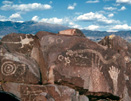 New Mexico’s name originates from “Nuevo Mexico,” named by the Spanish for the upper Rio Grande. The state’s history is rich, extending long prior to European settlement to the time of the Puebloan peoples. Spanish conquistadors were sent to what was claimed as New Spain, and so Francisco Vasquez de Coronado arrived to the area. Relations between the Native peoples and Coronado’s expedition were hostile. Eventually, the colony of San Juan was established in 1598. Uprisings by Native peoples pushed the Spanish out of the region for some time.
Eventually Mexico became independent of Spain, and what is now New Mexico became its province. The Santa Fe Trail brought American traders into the area, with Texans gaining claim to some of the land in 1841. Following the Mexican War, New Mexico became a territory of the United States. A time of conflict existed with the Apache and Navajo peoples, until Geronimo’s eventual surrender. New Mexico gained statehood in 1912.
The state changed forever with the rise of the Atomic Age. With Los Alamos National Laboratories, the United States perfected atomic research. The first atomic bomb was detonated at White Sands Proving Grounds in 1945. An apparent atmospheric experiment gone awry became the stuff of legend in 1947, with claims of an extraterrestrial crash near Roswell.
Today, many Native peoples remain in New Mexico on reservations, including the Navajo, Apache, Pueblo, and Ute. By far the largest reservation belongs to the Navajo, or Dine, people.
Many famous people have called New Mexico their home. Among these are singer John Denver, actress Demi Moore, sportscaster John Madden, actor Neil Patrick Harris, and astronaut Sid Gutierrez.
The Land of Enchantment’s rich history and forward thinking progress in biotechnology and life sciences ensures that New Mexico’s future will “grow as it goes”.
Related Resources
Return to Destination New Mexico